Showing posts with label Kamalroop Singh. Show all posts

Monday, 25 January 2016

The Guru’s warrior scripture by Kamalroop Singh and Gurinder Singh Mann

The scripture known as the Dasam Granth Sahib or the ‘Scripture of the Tenth King,’ has traditionally been attributed to Guru Gobind Singh. It was composed in a volatile period to inspire the Sikh warriors in the battle against the Moghuls, and many of the compositions were written for the rituals related to the preparation for war (Shastra puja) and for the battlefield. The verses generally consist of battle scenes and equate weapons with God, where the sword symbolises the victory of good over evil. War, according to the Tenth Guru, should only be a righteous war or dharam yudh, and it is true that the Sikhs throughout their history have been noted for their exemplary ethics in warfare. Guru Gobind Singh writes in his epic letter known as the Zafarnama that it is only justified to ‘raise the sword once all means have been exhausted.’ The compositions were written in mostly Braj Bhasha, and some smaller compositions are composed in Persian and Punjabi. In contrast to the primary Sikh scripture, the Adi Guru Granth Sahib, which is written in Shanti ras or verses that inspire peace, the Dasam Granth has a heroic strain of expression or Vir ras.
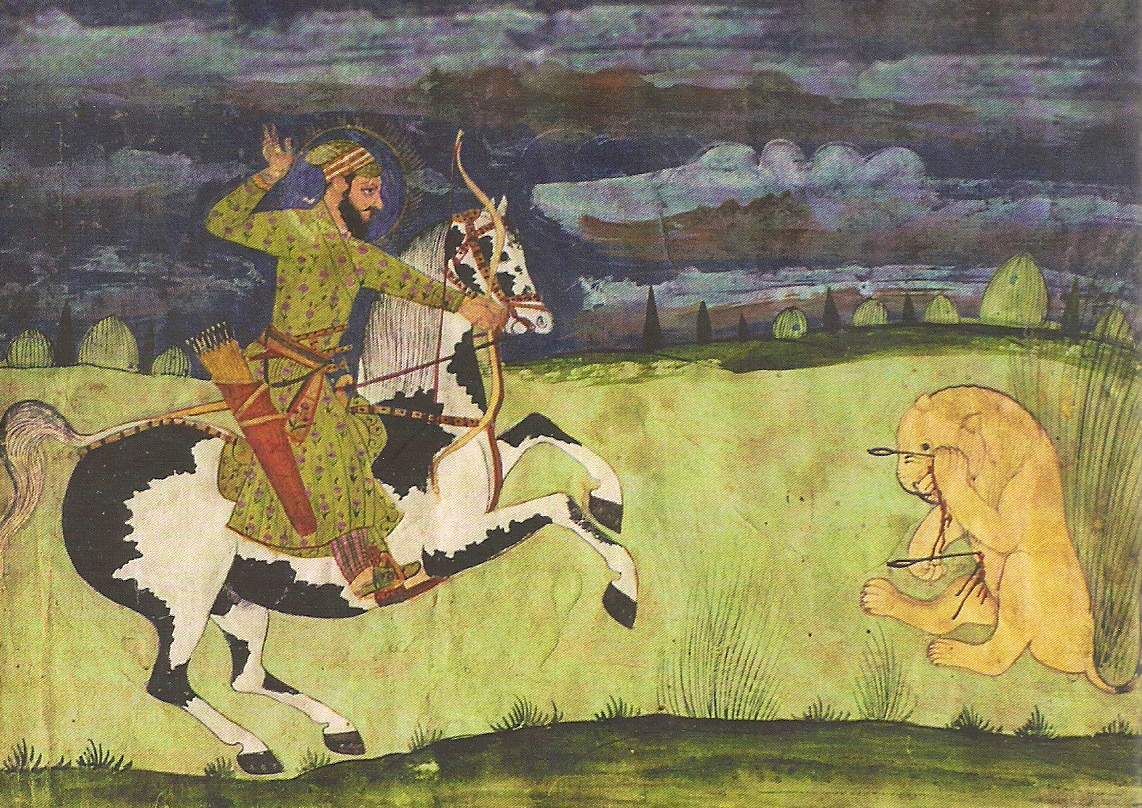

dasam granth 1
A portrait of the Tenth Guru hunting from the ‘Anandpuri’ recension of Dasam Granth from 1696 AD by Joginder Singh Ahluwalia. Used with permission.
In recent times, the Dasam Granth has been of much interest and volatile debate. This debate has its roots during colonialism in the Sikh reformist movement, known as the Singh Sabha. The most controversial and volatile discussion is that of the authorship, which is the most polemic and opinionated argu­ment that one could ever experience. Rather than being concerned with this issue of authorship, it is better that discussions are based on primary sources, like manuscripts and relics.
There is an intrinsic relationship of the scripture to the maryada (traditions), which includes the shastras (weapons), the Takhts (thrones of polity), and the warriors known as the Akali Nihangs. It is important to consider the historical context that the scripture was written in, and its link with battlefield sciences of the period. Whilst the primary scripture is now predominantly seen in Gurdwaras or Sikh temples across the world, during colonialism the Dasam Granth was removed from its ceremonial role, and it actual contents have been overshadowed by the rhetoric of reformist movements.
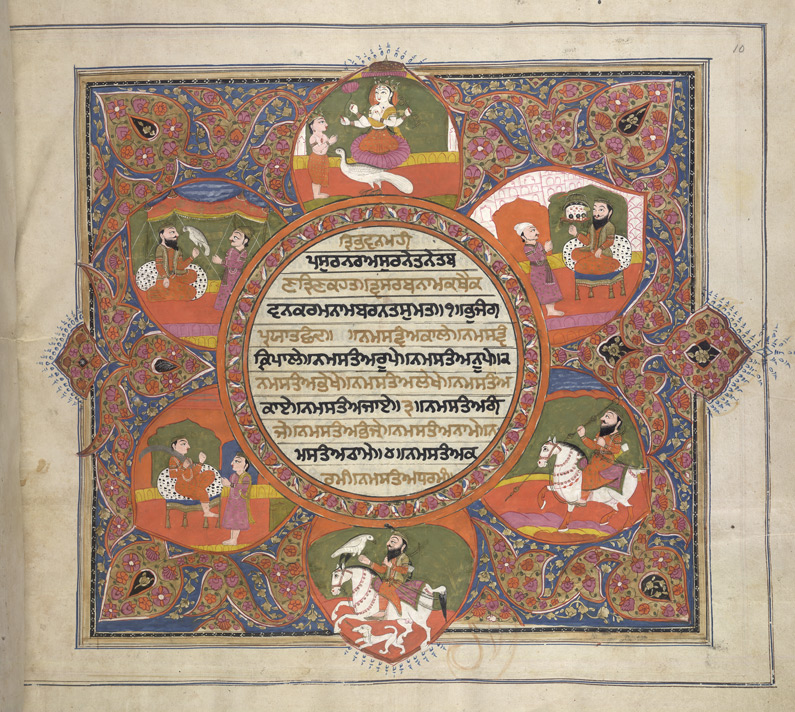

dasam granth 2
Illuminated frontispiece of the Dasam Granth, a scripture of Sikhism containing many of the texts attributed to tenth Sikh guru, Guru Gobind Singh (1666­1708). (Image credit: “Dasam Granth” from Or. 6298. © The British Library Board, used with permission.)
- See more at: http://blog.oup.com/2016/01/gurus-warrior-scripture/#sthash.eSGXVZPh.dpuf

Tuesday, 29 January 2013

The 'Path of Love' - Prem Sumarag Granth - Patshahi 10·


One of the oldest dated Rahitname is the 'Prem Sumarag Granth', the oldest manuscript copy I have seen of it is from 1701 AD, therefore in the lifetime of Guru Gobind Singh ji. The Nihang Singhs, and Sant Khalsa i.e Nirmale and Namdharis, consider this Granth to be very important. Dr Leyden was the first person to translate the Prem Sumarag Granth into English, he travelled to India in the 18th Century, and his translation is in the British Library.
Please visit
The 'Tat Khalsa' Singh Sabha found this Granth to be quite controversial and side-linded it. The purpose of this note is not to talk about those sections, but concentrate on others of profound beauty and depth. You can see an original copy of the first chapter on the Panjab Digital Library.
The following was translated by the ex-Christian priest, the scholar W. H. McLeod, Prem Sumarag, :
[My] son, I have fashioned you from my own being [ and I have created] a Panth to serve as witness to the world. What kind of Panth [ have I created]? One in which dharam has made its abode, [one in which], error is destroyed and true wisdom exalted. I am the Supreme one. Know none save me, for I have set forth the Panth [as a witness to the truth]. To the people [of the world] I have delivered the message of the divine Word through succession of 10 incarnations. To the shame of all who inhabit the world error still remains. That which I have performed I have imprinted on [every] person. I, the Supreme One, dwell within every heart. Is anything hidden from me?
The next section can be summarised as. the first rahit is to wake up at Amritvela, to relieve one's self, bathe, then do nam simran and the second rahit is to read Gurbani. The third rahit is Rahiras Sahib and the forth is read bani from both the Adi Guru Granth Sahib and Dasam Granth Sahib in the evening, recite Kirtan Sohila, then:
'Breath Vahi from your navel as you inhale and Guru as you exhale.'
Then you will repeat Vahiguru and your deep consciousness will remain ever awake.
A Singh should be humble but always with his weapons! Accept the Guru's bani as Guru.
Let those who are Sikhs of the Khalsa show affection towards each other. Let them remain united, regardless of the good or evil each may perform. If any Sikh is attacked all others should be prepared to join in his defence. Thus shall they earn the merit conferred on those who believe in the Sikh Faith and they will see Guru Baba Sri Akal Purakh come to their instant aid.
A man must not keep the company of another man's wife. Do not act possesively. Do not act out of anger and pride. Do not be attached to mundane concerns and avoid vilifying others. Do not lie - but do not speak the truth that will harm another. Act graciously remembering this human body will one day perish. Live in the awareness that this very breath may be your last. Do not waste your breaths idly. Harm no one. Speak to bring happiness. If your are abused do not take it to heart. Let nothing grieve you, see respect and insults as the same. Do not live of charity, work your dharam ki kirati. The only giver is Guru Baba Akal Purakh. To fulfill your desires do not visit tombs, temples of deities (gods/goddesses), fast, idol worship, magic, or ritually bath. Do do not go to the Brahmins. Do not follow empty ritualism. Instead meditate on the Lotus Feet of Sri Akal Purakh.

Monday, 21 January 2013

Do you want to help to restore one of the oldest Guru Granth Sahibs in the world?


Panjab Cultural Association is proud to announce our preservation project of Guru Granth Sahib. This valuable Sikh treasure was discovered by a leading academic who works with Panjab Cultural Associations, took the great task of arranging to preserve this valuable treasure for posterity. Unfortunately, the Guru Granth Sahib currently requires extensive conservation work in order to restore it. We urgently need you to donate and volunteer your skills in order to restore the saroop and create and exhibition around it. Please email admin@5culture.org .


- It is all written in hand and continuous (larivar).
- This Guru Granth Sahib is one of the oldest saroops in the UK, if not in the world.
- Like many other saroops in the UK it was taken in the Anglo-Sikh wars.
- The ink recipe is at the end of this Holy Guru Granth Sahib.

Where did this saroop come from?

It was taken in the Battle of Gujerat or final Anglo-Sikh war. It was alleged to have been taken from a Sikh priest by an officer of the 52nd Bengal Native Infantry at the Battle of Guzerat (Gujrat) on 21 February 1849.  

How do we know how old it is?

From the features of this saroop and studies of it by experts in the field we can be sure that this saroop is at least from 1690 AD. What is exciting is that it has been rebound and the Saloks of the Ninth Guru added in, which might make it even older.

Out of 15 manuscripts of this type of recension, a leading academic records this manuscript to be the oldest! More information will be provided at the seminars!

Other discoveries made from within this saroop will be disclosed in a forthcoming exhibition of this Guru Granth Sahib once it has been restored and digitalised. We urge you to donate generously towards the restoration costs of this Granth {27,000 GBP} and 7,2500 GBP in order to digitise the saroop. Please visit oursecure donation page to contribute towards this valuable seva.


The Sri Guru Granth Sahib has been examined by a number of experts of Sikh manuscripts and evaluated by Giani Rann Singh head Giani of Sant Samaaj and Tarnadal.  
CONSERVATION TREATMENT 
The following report has been provided by a University.
CONDITION: Book block: has sustained serious damage such as missing areas and tears. The first and last pages are in the worst condition, particularly the endpapers have been seriously damaged. The paper at the ends of the book is much more brittle as a result of being more exposed to the air and the paper being oxidised.
Boards & Board Attachment: The leather is worn at all corners of the book block, down the sides of the spine, across the middle raised band on the spine and the point of the enclosing flap. The leather is tornand lifting.  The spine adjacent to this tear is also lifting, revealing the join between the two covering pieces of leather. While still attached to the endpapers the front endpaper is no longer attached to the book block
Endpapers: Poor condition, the front endpaper has been torn in half and is separate from the book block, and as a result is torn, creased and dirty.
TREATMENT: 12 months, Manuscript will be complete, strengthened and useable for most library purposes, consultation, reprography, display etc
COSTS: Conservator (Grade 4) = £27,000 Materials costs £500 approx
Approximate total cost: £27,500
RECOMMENDATIONS 
It is also recommended that the manuscript be digitised as part of the conservation process.
DIGITISATION COSTS
£7,250.00
We urgently need you to donate and volunteer your skills in order to restore the saroop and create an exhibition around it. Please email admin@5culture.org .

A reply to a message about the meaning of the Adi-Chand emblem


ਗੁਰੂ ਫ਼ਤਿਹ!

ਵਾਹਿਗੁਰੂ ਜੀ ਕਾ ਖ਼ਾਲਸਾ॥
ਵਾਹਿਗੁਰੂ ਜੀ ਕੀ ਫ਼ਤਿਹ॥

ਫ਼ਤਿਹ ਪ੍ਰਵਾਨ ਹੋਵੇ ਵੀਰ ਕਮਲਰੂਪ ਸਿੰਘ ਜੀ!
ਆਸ ਹੈ ਵਾਹਿਗੁਰੂ ਜੀ ਦੀ ਬਖ਼ਸ਼ਿਸ਼ ਸਦਕਾ ਆਪ ਜੀ ਚੜ੍ਹਦੀ ਕਲ੍ਹਾ ਵਿੱਚ ਹੋਵੋਗੇ! ਵੀਰ ਜੀਓ, ਆਪ ਜੀ ਤੇ ਵਾਹਿਗੁਰੂ ਜੀ ਦੀ ਮਿਹਰ ਹੋਈ ਕਿ ਆਪ ਖ਼ਾਲਸੇ ਦੀ ਖ਼ਾਲਿਸ ਦਿੱਖ ਦੇ ਮਾਲਿਕ ਬਣੇ। ਆਪ ਜੀ ਦੀਆਂ ਤਸਵੀਰਾਂ ਦੇਖੀਆਂ। ਇੱਕ ਤਸਵੀਰ ਵਿੱਚ ਆਪ ਜੀ ਨੇ ਦੁਮਾਲੇ ਤੇ ਜੋ ਚੰਨ-ਤੋੜੇ ਸਜਾਏ ਹਨ ਕੀ ਉਹਨਾਂ ਬਾਰੇ ਕੁੱਝ ਚਾਨਣਾ ਪਾਉਗੇ? ਆਪਣੀ ਤਸਵੀਰ ਨੂੰ ਮੁੱਖ ਰੱਖ ਕੇ ਕ੍ਰਿਪਾ ਕਰ ਕੇ ਹੇਠ ਲਿਖਤ ਬਾਰੇ ਆਪਣੇ ਕੀਮਤੀ ਵਿਚਾਰ ਸਾਂਝੇ ਕਰੋ ਜੀ:
“ਇਤਿਹਾਸਿਕ ਖੰਡੇ ਦੀ ਜਗ੍ਹਾ ਦੋ ਘੁੰਗਰੂਆਂ ਵਾਲੇ ਚੰਨ-ਤੋੜੇ ਨੂੰ ਸਿੱਖ ਧਰਮ ਵਿੱਚ ਕਿਸ ਨੇ, ਕਦੋਂ ਅਤੇ ਕਿਉਂ ਪ੍ਰਚੱਲਤ ਕੀਤਾ? ਕੀ ਵਜ੍ਹਾ ਹੈ ਕਿ ਅੱਜ ਦੇ ਅਖੌਤੀ ਸਾਧ ਅਤੇ ਕਈ ਹੋਰ ਸਿੱਖ ਆਪਣੇ ਦੁਮਾਲਿਆਂ ਤੇ ਬਜਾਏ ਖ਼ਾਲਸੇ ਦੇ ਵਿਰਾਸਤੀ ਖੰਡੇ (ਜਿਸ ਵਿੱਚ ਖੰਡਾ, ਚੱਕਰ ਅਤੇ ਦੋ ਕ੍ਰਿਪਾਨਾਂ ਮਿਲ ਕੇ ਸੰਪੂਰਨ ਖੰਡਾ ਬਣਾਉਂਦੀਆਂ ਹਨ) ਨੂੰ ਤਿਆਗ਼ ਕੇ ਇਸ ਚੰਨ-ਤੋੜੇ ਨਾਲ ਮੋਹ ਵਿਖਾ ਰਹੀਆਂ ਹਨ। ਪਿੱਛੇ ਜਿਹੇ ਵੀਰ ਡਾ: ਉੱਦੋਕੇ ਹੋਰਾਂ ਇਹ ਵੀ ਦੱਸਿਆ ਸੀ ਕਿ ਸਾਡੇ ਗੁਰਦੁਆਰਿਆਂ ਵਿੱਚ ਲਾਏ ਜਾਣ ਵਾਲੇ ਨਿਸ਼ਾਨ ਸਾਹਿਬ ਉੱਪਰ ਵਾਲੇ ਖੰਡੇ ਦੀ ਸ਼ਕਲ ਨੂੰ ਵੀ ਹਿੰਦੂ ਤ੍ਰਿਸ਼ੂਲ ਦਾ ਰੂਪ ਦੇਣ ਦੇ ਕਈ ਕੇਸ ਸਾਹਮਣੇ ਆਏ ਹਨ। ਅਸੀਂ ਕਦੋਂ ਤੱਕ ਇਸ ਚੁੱਪੀ ਨੂੰ ਧਾਰੀ ਰੱਖਣਾ? ਕੀ ਇਸੇ ਤਰ੍ਹਾਂ ਹੀ ਹੌਲੀ-ਹੌਲੀ ਹਿੰਦੂਆਂ ਦੇ ਹੱਥੋਂ ਸਿੱਖੀ ਦਾ ਘਾਣ ਕਰਵਾਈ ਜਾਣਾ? ਅੱਜ ਹਿੰਦੂ ਸਾਡੇ ਹੀ ਭਰਾਵਾਂ ਹੱਥੋਂ ਸਾਡੇ ਹੀ ਧਰਮ, ਧਰਮ ਗ੍ਰੰਥ, ਧਰਮ ਚਿੰਨਾਂ, ਵਿਰਾਸਤ, ਸਤਿਕਾਰਿਤ ਸ਼ਹੀਦਾਂ, ਮਾਂ-ਬੋਲੀ, ਮਾਂ-ਧਰਤੀ, ਆਦਿ ਨੂੰ ਮਲਿਆਮੇਟ ਕਰਣ ਦੇ ਨਿੱਤ ਨਵੇਂ ਪ੍ਰਯੋਜਨ ਕਰ ਰਿਹਾ ਹੈ ਅਤੇ ਅਸੀਂ ਹਾਂ ਕਿ ਦੇਖ਼ ਕੇ ਵੀ ਅਣਦੇਖਿਆ ਕਰ ਦਿੰਦੇ ਹਾਂ। ਸੋਚ ਲਓ ਕਿ ਸਿੱਖੀ ਨੂੰ ਆਉਣ ਵਾਲੀਆਂ ਪੀੜ੍ਹੀਆਂ ਲਈ ਵੀ ਸੁਰੱਖਿਅਤ ਕਰਨਾ ਜਾਂ ਗੁਰੂਆਂ ਅਤੇ ਸ਼ਹੀਦਾਂ ਦੀਆਂ ਜਾਨਾਂ ਦੇ ਮੁੱਲ ਲਈ ਸਿੱਖੀ ਨੂੰ ਕੌਡੀਆਂ ਭਾਅ ਰੁੱਲਣ ਲਈ ਛੱਡ ਦੇਣਾ। ਕਈ ਸਦੀਆਂ ਗ਼ੁਲਾਮੀ ਕੱਟਣ ਵਾਲੇ ਨੂੰ ਅੱਜ ਜਦੋਂ ਰਾਜ-ਭਾਗ ਮਿਲਿਆ ਉਹ ਅੱਜ ਘੱਟਗਿਣਤੀ ਕੌਮਾਂ ਮੁਸਲਿਮ, ਸਿੱਖ, ਈਸਾਈ, ਆਦਿ ਨਾਲ ਕਹਿਰ ਕਮਾ ਰਿਹਾ ਹੈ। ਲੋੜ੍ਹ ਹੈ ਕਿ ਜੱਥੇਬੰਦ ਹੋ ਕੇ ਇਹਨਾਂ ਦਾ ਮੂੰਹ ਤੋੜਵਾਂ ਜਵਾਬ ਦਿੱਤਾ ਜਾਵੇ।”
ਧੰਨਵਾਦ ਜੀ! ਵਾਹਿਗੁਰੂ ਜੀ ਕ੍ਰਿਪਾ ਕਰਣ ਅਤੇ ਹਮੇਸ਼ਾਂ ਚੜ੍ਹਦੀ ਕਲ੍ਹਾ ਬਖ਼ਸ਼ਣ!
ਗੁਰੂ ਫ਼ਤਿਹ!
ਸਤਿਕਾਰ ਸਹਿਤ,
ਸੁਖਜਿੰਦਰ ਸਿੰਘ


The Adi-Chand is the union of Adi Shakti (the Khanda) and the Channd (the moon).

According to the Buddha Dal oral tradition, at Mecca Guru Nanak was given the Channd, he said in my Tenth form I will unite it with the Sword.

The symbol means Degh and Tegh - eg the Batta of charity (Degh) - and the Tegh Sword -(Khanda)

Therefore it is the Khanda and Batta of the Amrit sanchar.

If we go even deeper into the spiritual meaning:

The Khanda is a solar symbol. The channd is obviously the moon.

This Shabad is by Bhagat Kabeer Ji in Raag Raamkalee on Pannaa 971 

sis kIno sUr igrwsw ] sas keeno soor giraasaa || the moon energy has devoured the sun energy.


MATV Interview with Harjap Singh Bhangal

MATV

I was invited on MATV to dispel the myths about Nihang Singhs. Harjap and I were at Uni together in the mid 1990s.  It was televised live from Wembley, 31 st January, 2011 6.45pm. Here are some of the question put forward:


What are nihangs? how did they come about? what do you believe in? what is your way of life? why as a uk born and bred person have u adopted this way of life? what are the codes of nihangs? why you wear what you do....is there still a purpose and need for nihangs in this day and age?....why are people afraid of approaching you? are u fundamentalists?....are you warmongers?....what are the positives and negatives in the way our gurdwaras are run on the uk?....why do nihangs not participate more in gurdwara structures?....what can youngsters do if they want to learn more?...what can you say to parents to make them realise this isnt a cult or extremist faith?....how are you precieved by the punjabi community?....is it true that nihangs drink bhang?....do nihangs do nasha?....do nihangs eat meat?....do they drink sharaab?....generally anything and everything to do with nihangs...and of course you are more than welcome to add any message of your own....

The video is coming soon.................

Thursday, 17 January 2013

A brief guide to researching Gurmukhi manuscripts and some photos of a research visit to Punjab

During the Singh Sabha movement a lot of manuscripts were edited. For scholars this creates obvious problems, so it is necessary to turn to primary sources to understand history and other issues more accurately. In some printed editions words have been changed all to often, as well as whole paragraphs, sections, pages, and chapters being excised! Another issue is that many manuscripts have never been printed, so there is ample new material out there, which is mind blowing! I have added a few photographs of my travels with a list of places you can find manuscripts, lithographs, and first editions:

United Kingdom

1. British Library ww.bl.uk
http://www.bl.uk/manuscripts/

Click here for an overview:
http://www.asiamap.ac.uk/collections/collection.php?ID=219&Browse=Region&Region=5

2. Wellcome Trust Library
 http://library.wellcome.ac.uk/about-us/about-the-collections/archives-and-manuscripts/

3. Cambridge University Library
http://www.joh.cam.ac.uk/library/special_collections/manuscripts/oriental_manuscripts/

4. Oxford University - Indian Institute Library
http://www.bodleian.ox.ac.uk/

5. Guru Nanak Sikh Museum, Leicester
http://www.thesikhmuseum.com/contact.htm

6. John Rylands Library, Manchester
http://www.library.manchester.ac.uk/

America

Some great secondary sources and first editions at the center for research libraries:
http://catalog.crl.edu/

India - Punjab

1. Amritsar

Guru Nanak Dev Ji University
http://library.gndu.ac.in/Manuscripts.asp


Khalsa College
http://www.khalsacollegeamritsar.org/library.html


Bhai Santokh Singh Library, Sri Darbar Sahib


2. Ludhiana


Jawadi Taksal
Panjabi Sahit Academy, Punjabi Bhawan
http://www.psaldh.org/pb/


3. Patiala
Punjabi University, Library

Bhasha Vibhag
http://www.pblanguages.gov.in/

I had a look at a number of manuscripts related to the Dasam Granth Sahib and Court Poetry of the Tenth Guru. I made some amazing finds that I hope to share in the future!


By chance I met with Prof. Gurinder Singh Mann pictured behind me!


States Archives
http://www.e-corpus.org/punjab.html


Najabat Ali head of Gurmukhi, Persian and Urdu manuscripts in the State Archives


Central Public Library


At this library the head of the manuscript section is a great and generous individual Dr Rupinder Singh. he has recently written this essay: 'RARE MANUSCRIPTS OF MUSAFIR MEMORIAL CENTRAL STATE LIBRARY, PATIALA : A HIDDEN TREASURE' . At this Library I looked at some very old Gurmukhi manuscripts one called the Baznama related to how to look after Birds of Prey, from the Court of the Guru, as well as many others to recount!


Dr Rupinder Singh showing me an eighteenth century manuscript of the Holy Qur'an.


4. Chandigarh


Punjab University Library
www.library.puchd.ac.in


Punjab Digital Library online : 

http://www.panjabdigilib.org/webuser/searches/mainpage.jsp


Pakistan


Punjab University Library
http://www.pulibrary.edu.pk/
http://www.pulibrary.edu.pk/personalCollections/mianJamilAhmadSharaqpuri/List_of_collection_MianJamilAhmad.xls
http://www.qal.org.pk/


You can also search this:

http://www.e-corpus.org/search/search.php?place=organization_id_281&page=1&search=search&q=Sikh
Also see: 
https://coral.uchicago.edu:8443/display/lasa/Punjab+%28India%29

There are many more manuscript collections around the world more information coming soon!!


Wednesday, 16 January 2013

A presentation on the Dasam Granth given at Lund University in 2008


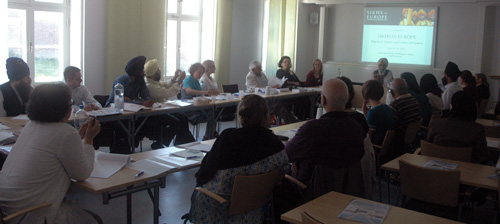
An Exploratory Workshop on "The Sikhs in Europe. History, Religion and Representation" was held at Lund University, 13-14 June 2008. The conference was funded by the Bank of Sweden Tercentenary Foundation, the Swedish Research Council, the Swedish Council for Working Life and Social Research and the Wenner-Gren Foundation. The invited speakers included Prof. Shinder Thandi from Coventry University, UK, who talked about "Migration and History of the Sikhs in Europe"; and Prof. David Omissi, University of Hull, UK, who talked about "Indian Soldiers in Europe, 1914-1918". The entire workshop was public. On the second day, discussions were held regarding possibilities for future European collaborative research projects on Sikhs in Europe. More information.
At the end of the workshop, the participants decided to establish the network Sikhs-in-Europe for the purpose of developing closer academic cooperation between students and researchers with a common interest in the Sikhs and Sikhism in Europe.
The creation of the network Sikh-in-Europe reflects a growing academic interest in the European Sikh and Punjabi diasporas. An extensive migration from the Punjab – the north-western state of India and the “ homeland" of the Sikhs - in the twentieth century resulted in Sikh settlements in different parts of the world. This development attracted the scholarly attention to the Sikh religion and Sikh diasporas, especially in English-speaking countries. New patterns of migration, settlements, representations and transnational networks of the Sikhs in more recent decades have made scholars aware of the importance to undertake research studies of the Sikhs in different European contexts and the need to create academic collaborations across disciplinary and national borders. As the first step in this direction, the network Sikhs-in-Europe is an initiative to create cooperation between scholars who come from a wide range of disciplines and are affiliated to different universities in Europe and beyond. In July 2008, a new web site was established by the network, titled Sikhs-in-Europe It contains a lot of useful information about conferences etc. Go to the web site.
sikhconflund10 (40K)
A full-scale three-day conference on "Sikhs in Europe. Migration, Identity and Translocal Practices" was then held at Lund University, 16–18 June 2010. The aim was to gather leading scholars in the multidisciplinary field of Sikh studies and discuss current research projects focusing on patterns of migration, identity formations, self-representations, transmission of traditions and trans-local practices among Sikhs in different parts of Europe.
gurindersingh (7K)sikhconf3 (10K)
While two conference days were dedicated to presentation and peer-review of papers by the members of the academic network Sikhs-in-Europe, the third conference day was a workshop for Ph.D. students affiliated to European universities, organised by Dr. Laura Hirvi, University of Jyväskylä, Finland.
Knut and KristinaGurinder S MannThe conference was again convened by Dr. Kristina Myrvold, Lund University. Here seen with Prof. Knut Jacobsen, University of Bergen (photo to the right).
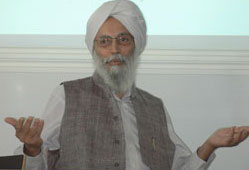
The keynote lecture on 16 June was given by Prof. Gurinder Singh Mann, Centre for Sikh and Punjabi Studies, University of Californa at Santa Barbara, USA (photo to the left). He spoke about "Guru Nanak and the Sikh Religion: Some Reflections", and focused on the classic 1968 monograph "Guru Nanak and the Sikh Religion" by Prof. W H McLeod, University of Otago, New Zealand.
Other participants to the conference included Dr. Doris Jakobsh, University of Waterloo, Ontario, who gave a SASNET lecture in 2004 on "Sikhs, Colonization, Gender and Ritual" (more information); Prof. Eleanor Nesbitt, University of Warwick, Coventry, UK (also Reviews Editor for the Journal of Punjab Studies); and PhD candidate Kathryn Dominique Lum, who completed Lund University’s Masters programme in Asian Studies in 2007, and is now based at the European University Institute in San Domenico di Fiesole, Italy, working on a doctoral dissertation project related to the Ravidassia Community and Identity(ies) in Catalonia, Spain (more information).
sikhconf2 (16K)
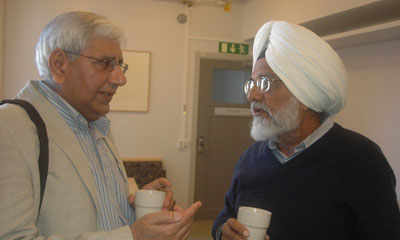
sikhconf1 (49K)Participants at the 2010 conference in Lund: Shinder Thandi, Coventry University, UK; and Swarn Singh Kahlon, independent researcher from Chandigarh, India. Other participants: Kaveri Harriss, University of Sussex, UK; and Kamalroop Singh, University of Birmingham, UK


Conference report: Sikhs in Europe 2010
Written by Administrator
The first report of the conference "Sikhs in Europe: Migration, Identity and Translocal Practices" that was held at the Centre for Theology and Religious Studies, Lund University, on June 16 to 18 is now available at the Swedish South Asian Studies Network (SASNET).
Sikhs-in Europe is an independent and interdisciplinary academic network for students, teachers and scholars conducting studies of and research in all areas related to the Sikh history, religion and culture in Europe. The forum was created in 2008 and is managed by a collaborative group of scholars from different European universities.

The aims of the network are:
  •   To promote and establish academic cooperation and exchange between students, teachers and scholars from various disciplines who share the interest in Sikh Studies.
  •   To assist students and scholars by facilitating access to information about research projects and publications on the Sikhs in Europe.
  •   To provide updated information about academic events and activities related to the Sikh Diasporas.
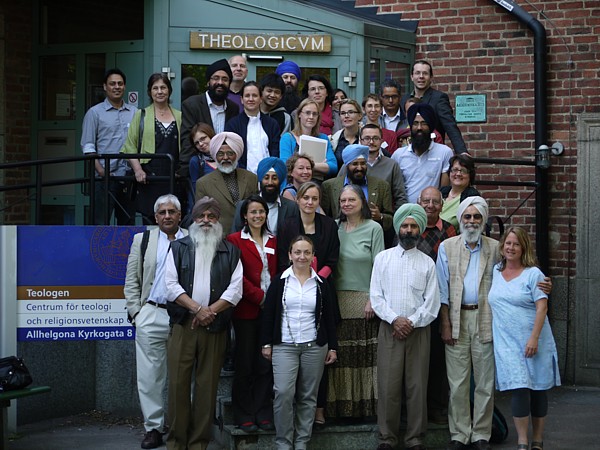
group photo 2010 (110K)
Participants of the conference "Sikhs in Europe: Migration, Identity and Translocal Practices" held at Lund University on June 16 to 18, 2010.
Photo: Martin Lund.

Sikh TV Interview with Rajinder Singh and Sukhi Wahiwala about my book Dasam Granth Sahib Questions and Answers

My paper at PRG Meeting, Coventry University, 28 June 2008

http://theprg.co.uk/?s=kamalroop+singh

Kamalroop Singh, University of Birmingham and Shironmani Panth Khalsa Akali Buddha Dal Panjva Takht, ‘A discussion of the scriptures of Guru Gobind Singh in relation to Sikh history and praxis’


Tuesday, 27 November 2012

Dasam Granth Paper presented at the Punjab Research Group

‘The Praxis of the Dasam Granth: A Research into the Liturgical and Ritualistic Ceremonies of the Scripture.’ Oxford University Sikh Society – April, 2008. Many thanks to Davinder Singh Panesar and Bob Singh Panesar for recording and producing the lecture.

Sunday, 25 November 2012

Did I get a PhD on Sri Dasam Granth Sahib? A response to baseless slander and gossip


Some people in the Sikh community like other communities are ignorant and stupid. Here is some information to clear up some baseless slander and rumours, designed to belittle my contribution to Sikh Studies and the Khalsa Panth. What is sad is when I hear these rumours from so-called friends, but as they say when someone does well, their peers will do their best to bring them down. I have discovered this lately and from within the Sikh community. Below is a Statement from years ago regarding my position about Snatanism! Even though I have never believed this philosophy. 

http://www.neo-sikhism.blogspot.co.uk/2008/11/another-statement.html 

A Statement 

http://www.panthic.org/news/131/ARTICLE/4518/2008-11-14.html I am not questioning your good intentions surrounding the editorial article. However, I would like make a categorical denial of claims in your editorial that pertain to me. Firstly, I am not a follower of Niddar Singh. Secondly, I do not believe in Snatanism. My PHD involves the study of the manuscripts of the Dasam Granth as well as the siginificance of the Dasam Granth to the Khalsa. As previously stated by me on your website: I do not believe that Sikhi is Snatan. Sikhi is Sikhi. Khalsa is the Third Panth, the third way. The Khalsa belongs to the Guru, and the Guru to the Khalsa. The Khalsa is not an off-shoot of any other movement. It became manifest by the order of Akal . I would ask you to publish this reply so that your readers are aware of facts that are personal to me. 
Kamalroop Singh

Thursday, 22 November 2012

A translation of the Shastravidia book by Baba Gian Singh coming soon!

Baba Giana Singh taught the most number of Gatka students in colonial times, when Gatka was under threat. Baba ji himself learnt shastravidia from either Baba Mangal Singh or Baba Swaran Singh. He published some books on the Adi Guru Granth Sahib ji which were printed by the SGPC. Dr Trilochan Singh writes in Ernest Trump & Hew McLeod as Scholars of Sikh History:
'Bhai Gian Singh, a Nihang scholar spent over forty years on similar textual study. He has recorded his findings of some very rare Manuscripts. He left one copy of his findings with me and another with Nihang Chief in the historic Damdama Sahib Dera. He published some basic findings.
Guru Gobind Singh got a number of copies prepared at Damdama a place specifically built for Scriptural studies at Anandpur. In all these, the hymns of Guru Tegh Bahadur were included. The author of this book has two copies dated 1705 AD and 1707 AD.(autographed by Guru Gobind Singh). Randhir Singh research scholar who had studied and recorded his notes in a book and Gian Singh Nihang who prepared notes on over a hundred codices (Birs) studied both these codices (Birs). Both of them found the 1705 AD codex the best and textually the most correct out of those studied by them. There no doubt exist many authentic and correct copies.

Prof G S Mann writes Randhir Singh, Kundan Singh, and Gian Singh Nihang published Sri Guru Granth Sahib ji dian Santha-Sainchian are Puratan Hathlikhit Pavan Biran de Praspar Path-Bhedan di Suchi ( The list of textual variations present in the early sacred manuscripts and printed versions of the Guru Granth Sahib) in 1977, which includes important textual details in the early scriptural manuscripts.

Although he was a great scholar he was a renowned master of Shastravidia and taught thousands of Singhs according to Baba Santa Singh at Akali Phoola Singh burj in Amritsar. He was known to have a lot of bir ras or warrior spirit, and gave physical beating to anyone who cared to transgress his patience.


Baba Santa Singh comments in the foreward to his the book written by Baba Giana Singh on Shastravidia that: 'Nihang Singh Baba Gian Singh Sutantar Purane Shastardhari Singh Han te Shastra vidia de vi change giata hai, ustad banke unna hazare singhan nu shastra vidia sikhai hai.' Nihang Singh Baba Gian Singh is a old wise armed Singh, who knows Shastravidia very well, being a Master, he has taught thousands of Singhs Shastravidia.' This book has been translated into English and will be published in the next few weeks.


The cover to the book titled Shastar Vidia - Baba Gian Singh - Buddha Dal press, Lower Mal Road, Patiala

Baba Giana Singh notes:

IK Oankar Vahiguru ki fi fateh! Sabh to pahila shastra-vidia da mul mantra parna chahida hai. Jo Gurmukh shastar vidia sikhna arabh kare, os da ih faraz hai ki mul mantra kant karake jarur hi nitnem naal paria kare. Jo Singh Sabh Gurmukh Nitnem Naal Path karega us singh nu datte Maha Akal de kazaney vicho Adi Shakti prapat hovegi, jo bharosey rakhega te bachan sat kar manega.

The mul mantra is Bhagauti Astotra, found in the Buddha Dal Gutka Sahib. I have translated this  into English and it is available................http://www.kamalroopsingh.blogspot.co.uk/2012/11/sri-bhagauti-astotra-patisahi-10.html. Bhagauti Astotra is in puratan seventeenth century sarups of Sri Dasam Granth Sahib, one example is the sarup at Patna Sahib (1698 AD). It is not in the current printed edition. It was written by Maharaj, but many Nihang Singhs and Sants have preserved it orally. Its in the current Buddha Dal Gutka Sahib. Its also used in Shastra Puja.

One of Baba Gian Singh students is also called Gian Singh. he is still alive and is about 98 years old, he reads a Panj Granthi and Das Granthi everyday at amritvela followed by practice of Shastarvidiya, he was a student of Sant Baba Gurbachan Singh Bhinderawale. He has trained 17 Singhs into skilled teachers of Shastarvidiya. May Maharaj allow Baba Ji to keep inspiring us, and the best of health. This photo was taken at Akali Phoola Singh Burj, Diwali, 2005. Baba Ji is an exponant of Jhatka Gatka, or Jang vidiya. Pictured below:


Another famous student of Baba Giana Singh 'Sutantra' is Baba Pritam Singh from Patiala, pictured below, with a video of his Gatka:


Monday, 5 November 2012

Book Review of Sri Dasam Granth Sahib: Questions and Answers by Harjeet Singh Grewal


Sri Dasam Granth Sahib: questions and answers
Gurinder Singh Mann & Kamalroop Singh, Archimedes Press, 2011100 pp., £8.99, ISBN 978-0-9568435-0-0

In Sri Dasam Granth Sahib: questions and answers, the authors Gurinder Singh Mann and Kamalroop Singh  seek to redress recent debates about not only the importance and relevancy of the Sri Dasam Granth Sahib  (SDGS) for the Sikh tradition, but they also entertain questions regarding its authenticity, authorship, as well  as the historical and contemporary position of this text for Sikh thought. The perspective of the book is  scholarly and grass roots, as both authors have spent time as active members of the Sikh community as well  as having pursued scholarly research of the SDGS at the postgraduate level. This volume appears to be  released as a needed intervention into the current controversy surrounding the SDGS as well as a brief  installment along the way to a larger, more comprehensive work discussing the SDGS. With a view to  describing some of the less well-understood intricacies of the SDGS, it is a welcome addition to the limited  number of English language volumes discussing the SDGS.
This work is meant to be a resource for students interested in Sikh Studies. As the title suggests, the book is  structured around common questions that many Sikhs today have regarding the SDGS. Indeed, as the  preface to the book reveals, some of the 50 questions posed in this work have been asked and addressed by  the authors previously on the following three websites: (1) www.sridasamgranth.com (2)  www.patshahi10.org and (3) www.dasam.info. However, while it may seem that the volume is merely repeating information that has appeared in other media, the volume is important as the authors have not only revised their original answers, but also because the volume collates these answers giving readers a singular reference for questions regarding the SDGS. The book is well researched, using manuscript sources from the seventeenth and eighteenth centuries as well as cross-referencing issues that arise from debates about the SDGS with passages from the primary Sikh scripture, Sri Guru Granth Sahib.The authors also use illustrations from these manuscripts as well as pictures of seventeenth-and eighteenth-century Sikh relics in order to support the view that they are purporting.
The work begins with a general description of the SDGS, it addresses the question of authorship – a point which is revisited at disparate points in the text, the SDGS’s central theme of the oneness of god is discussed, the SDGS’s engagement with moral themes,and finally a brief synopsis of the SDGS’s contents is provided for those unfamiliar with its outline. One of the central claims of the authors is that the SDGS gives a reinterpretation or, perhaps even, a correction to ‘Hindu’ mythology in order to foreground the moral core of the SDGS. This is done by Guru Gobind Singh not in order to link Sikhs to ‘Hinduism’, but rather to subvert the very idea that ‘myths’ can be claimed by a single historical bloc such as the term ‘Hindu’ suggests. The authors claim that,through the usage of vir ras, the SDGS puts forward a Sikh panthic worldview which exhorts people to take the Khalsa path and become karma yogi or a proactive renunciate. In donning such a stance, it compels people toward becoming true sovereign ethical beings – although this point is not expanded upon. The SDGS is not simple a secondary scripture, nor is it in opposition to Sikhi; more to the point, it is ‘complimentary’ with regard to the central message of Sri Guru Granth Sahib. Furthermore, commentary and understanding of the SDGS require a broader education in and knowledge of Sri Guru Granth Sahib and other Sikh scripture. In taking such a stance, the authors seek to correct the misplaced presumption that Sikhs had a singular scripture and restore the position of a scriptural constellation which fuels the Sikh political–spiritual vantage point.
From here the work considers the manuscript tradition as well as other early texts such as the various Rahitnamas. It is shown that these early works often engage with theSDGS, build upon it to develop a core group of ideals and, thereby, often assume the importance of the SDGS. Further on in the work, a discussion regarding the British Imperial perspective on the SDGS and its relation to the ‘Sikh Martial Spirit’ is provided as well as a description of the work done by the Sodhak Committee, which collated 32 manuscripts of the SDGS in 1895 and 1896. The central points from this committee’s deliberations are also given. These points include confirming that the entire SDGS was the work of Guru Gobind Singh, stating that the dates are verifiable and historical,Guru Gobind Singh used several pen-names throughout, and that some manuscripts contained unique content. The committee was central in providing a standardized text of the SDGS. The legacy of Singh Sabhia, Babu Teja Singh Bhashauria (1867–1933), is hereafter given as one of the central mechanisms through which the debate regarding the SDGS,but also sections of the Sri Guru Granth, begins. Teja Singh expressed his view that socalled spurious sections of these texts should be expunged and the remaining materialbe collated as a single scripture. Despite being excommunicated by not only the AkalTakht but also Takht Hazur Sahib, Takht Patna Sahib, and Takht Kesgarh Sahib between 1928 and 1929, Teja Singh’s legacy continues to fuel secular reformist sentiment regarding the Sikh scripture. The final series of questions deals with contemporary rites and sections of the Sikh panth which continue to uphold the position of the SDGS.
The very structure of Sri Dasam Granth Sahib: questions and answers, a question–answer format reminiscent of exegetical steeks and tikas, reveals one of the major limits of this work: its seemingly theological core. Despite trying to address the rationalist secular attacks from reformist Sikh critics and ‘Western’ scholars, the work itself relies upon the notion of a pre-existent theological core to the Sikh tradition which pervades what comes to resemble a Sikh Scriptural constellation. This is not to diminish the importance of the point that the authors are attempting to make, nor is it meant to takeaway from the very necessary corrective which they are engaging with regard to the rationalist monotheolingual perspective of Sikh scripture. It is merely to make the point that a more elaborate critical core to the argument may facilitate and strengthen the point being made. Beyond this point, the Sikh theological question–answer format can at times lead the work to read as disjoint, jarring, and sporadic. This structural problem often requires a degree of cross-referencing between different questions – an endeavor quickly frustrated by the lack of a comprehensive index.
While meant for students of Sikh Studies, this work assumes some degree of familiarity with Sikh textual materials, history, and theological debates. As such, the intricacies of the position being taking regarding the validity and centrality of the SDGS maybe missed by the uninitiated. Therefore, it is better suited to Sikhs or scholars with an active interest in textual and theological questions. The position of the authors is that the Dasam Granth is a Sikh scripture; that it is central to the development of Sikh rites and ceremonies; that the evolution and continued adherence to the Khalsa ideals of Guru Gobind Singh depend upon the SDGS; and, lastly, that the work in its entirety was originally authored by the tenth and last Sikh Guru. As such, the argument made is that when questioning the validity of the SDGS, a kind of symbolic violence is being done to the entire Sikh tradition. To extrapolate somewhat from the position taken by the authors in this work, one may claim that the debates around the SDGS are centered upon the position of Sikhi as a religion within the confines of a hegemonic secular discourse.In short, the ideals expressed and the reinterpretations of central ‘Hindu myths’in the SDGS need to be put in doubt if the discourse of secularism is to dominate. Thus,this work attempts to correct some of the invasive machinations by secular scholars of religion. As a brief installment of a larger more comprehensive volume discussing the SDGS, Sri Dasam Granth Sahib: questions and answers, raises some important points and provides a necessary corrective to the ongoing machinations of a minority of people regarding the position of the SDGS in the Sikh tradition and textual corpus. However,due to some of the structural and critical constraints outlined, the main argument’s dialectic rings hollow and leaves one anticipating the larger work referenced in the text’s preface.
Harjeet Singh Grewal
PhD Candidate
University of Michigan© 2012
Sikh Formations: Religion, Culture,Theory:  16 Oct 2012.